Writing Process Blog Tour

This post is part of a blog post relay on craft, which the wonderful Nancy Hightower invited me to join. Nancy is the author of Elementari Rising. She has a poetry collection, The Acolyte, forthcoming with Port Yonder Press, and her short story collection, Kinds of Leaving, was shortlisted for the Flann O’Brien Award for Innovative Fiction.

My take on craft:

1) What am I working on?

While my second novel, The Supper Club, is out on submission, I’m working on my third novel, Mother Christmas, a historical fantasy set in Ancient Turkey. I’m also writing the script for a graphic novel, Sticks & Bones, with artwork by the incredible Madeline C. Matz. The story follows displaced house spirits/household gods (brownies, domovyky, the tomte, etc.) who are being hunted in America.

2) How does my work differ from others of its genre?

My writing falls under the category of speculative fiction, more specifically magic realism, but I draw from an Eastern European folkloric tradition rather than a Latin American one. I enjoy looking at the mundane world through the lens of myth and fairy tale, bringing those magical stories into a contemporary context. In my work, I explore moments of revelation—epiphanies that come to light when two seemingly contradictory elements (like the magical/realistic) intersect. Those liminal spaces are my creative obsession—the places where ideas meet, where personalities collide, the crossroad moments in history.

3) Why do I write what I do?

What I write has been called “diaspora literature,” especially my first novel, The Silence of Trees. Diaspora literature is primarily concerned with the individual’s or community’s attachment to homeland. It is born from their sense of yearning for that homeland, an attachment to its traditions, religions, and languages. The diaspora writer creates from the threshold, from the border.

My grandparents came to America from Ukraine after WWII. Like many Ukrainian Americans, my sister and I were raised with one foot in each world: speaking Ukrainian at home, going to Ukrainian school, church, and dancing on the weekends; but also participating in modern American culture.  The Ukrainian language and traditions of our ancestors were being wiped out in the Soviet Union. We were taught that it was our responsibility to keep those traditions alive in America. Typical of the Diaspora experience, we were raised to retain a collective memory/vision about our ancestral homeland. I have no doubt that this is where my fascination with “the threshold” was born.

This directly ties into magical realism—with its crossing of borders that allow the writer to celebrate the myths and folklore of home, while creating tension in the story that echoes the experience of being ex-centric, out of the mainstream.

Ultimately, I think I write what I do to explore the paradox of the union of opposites.

4) How does your writing process work?

Most of what I write begins with a question, and those questions come from so many places: reading books or articles, people-watching, going for a walk. I usually write to explore the possible answers: What makes some people bury the past, while others celebrate it? When faced with cruelty, how can two people have such a dramatically different response? What happens to all those teeth? How might the ancient gods of the ocean respond to a devastating oil spill? How might house spirits communicate with one another? For me, the act of writing is the joy and magic of exploration.

As far as process, I most often write at night. I put the kids to bed, wrap up mundane tasks, and brew a pot of coffee. The nighttime has a natural air of magic and mystery, which makes it easier to leave the “real” world behind and slip into the world I am creating. The “writing witching hours” are usually 10pm to 2am. In the morning, after getting up and dropping the kids off at school, I tend to the business of writing. That’s when I do most of my editing and revision, emails, etc. Then I try to get in another four hours of writing in the late morning/early afternoon. Generally, the more I write, the happier I am. I feel like there are so many stories to tell, and I’m trying to find the time to get them all down.

* * *

Next up on the Writing Process blog tour are two fabulous writers: Brooke Bolander and Amelia Beamer! Look for their blog posts on May 19th!

Brooke Bolander‘s work has been featured in Lightspeed, Strange Horizons, and Nightmare, among other venues. She writes stories of indeterminate genre that some might classify as slipstream, although simply calling them weird would probably do just as well.

Look for Brooke’s post at: http://brookebolander.com/

Amelia Beamer is the author of The Loving Deadthe number two zombie novel of the past decade according to Barnes & Noble. She works as an independent editor and proofreader with major publishers including Shueisha English Edition, a new general imprint of popular Japanese titles translated into English. She built her publishing career working as an editor at Locus for seven years, and for three years before that as a student assistant at the Clarion Writers’ Workshop. She publishes short fiction, book reviews, poetry, and cultural criticism. Her most recent short fiction appears in Psychos: Serial Killers, Depraved Madmen, and the Criminally Insane, and Zombies vs Robots: Women on War!  

You’ll find Amelia’s post at:  http://www.ameliabeamer.com/
Two Sides of The Slush Pile

While I was revising my second book, The Supper Club (update on that soon), I spent a lot of time last year reading and writing short stories and poetry. I wasn’t quite ready to delve into the next novel, and I wanted to sharpen some skills and exercise writerly muscles I hadn’t used in a while, so I wrote poems and short stories, flash fiction and prose poems.

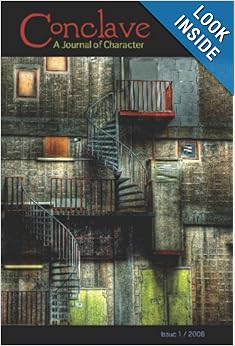
In the second half of 2013, I began to submit work to literary magazines, something I haven’t really done since graduate school. My recent experience with literary journals was from the opposite side of the slush pile–with Conclave: A Journal of Character, the literary magazine I founded back in 2008.

You can read the Foreword from the first issue of Conclave on my tumblr account. But I wanted to quote one part of it here:

“When we decided to create Conclave: A Journal of Character, we knew that our focus would be on character-driven writing and photography, so we sought out a name for our literary magazine that would reflect the assembly of all those characters, as well as the artists and writers who dream them up. We chose conclave because it means a gathering, a private chamber, a room that may be locked. It has the Latin roots of com(meaning “with” or “together”) and clavis (meaning “key”).”

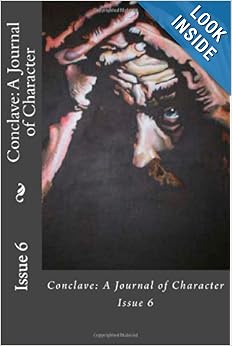
With a really wonderful volunteer staff of more than 20 people, we put out two issue before I came to the decision to sell the magazine. I was spending more time editing than writing, and I wanted to be writing. While I loved having a place to publish these great character-driven works, I didn’t really have the time to keep it going. Fortunately I sold the magazine to a brilliant writer who had been published in our first issue, Savannah Thorne.

I’ve been thinking a lot about Conclave recently because Electric Velocipede published its final issue this month. Founding editor John Klima published 27 issues of the award-winning journal for more than 12 years before he decided that it was time to cease publication. You can read John’s final editorial note here.


Magazines like Electric Velocipede and Sybil’s Garage inspired me to start Conclave in the first place. I understand the kind of sacrifice and dedication Matthew Kressel and John put into their issue, the same kind of energy that Savannah devotes to Conclave today. When it boils down to it, most of these journal and magazines, online and in print are labors of literary love.

Savannah has done an amazing job with Conclave, better than I could have done. With the help of many of the editors from our first issue (Tom Gill, Michael von Glahn, Rebecca Kyle, and others), she has built upon the idea of a literary magazine with a character focus, and Conclave continues to feature new and seasoned writers and terrific photographers. Their work is full of provocative, powerful, unforgettable characters. I’m so proud to be a part of its history, and I’m really excited to see where she takes Conclave into the future.

You can buy the current issue in electronic and print format on Amazon, and I encourage my writer-friends to check out their guidelines.

After submitting, I’ve finally started to receive notices of acceptance. This year, I’ll have work forthcoming in Abyss & Apex, Fickle Muses, Mythic Delirium, Scheherezade’s Bequest, and hopefully more to be announced soon!

This month, I have one poem, “Daughters of Melisseus” in Abyss & Apex, and two poems, “For collectors not children” and “Singing the Dirge” in Fickle Muses.

I’m excited to publish shorter writing as I get to work on book #3, and it’s nice to be able to point people to my work online. Plus poetry is a passion of mine–the evocative imagery, the music of the words, the rhythm of the lines. Reading poetry is such a joy; and writing it…is like being engulfed in a sensuous maelstrom of language.

Virtual Authenticity

I’ve been thinking a lot about authenticity, about what is genuine.

It’s something I look for and love about the people in my life: give me honest grumpiness over false pleasantries. I think that’s why I sometimes have a hard time with sarcasm–if I can’t tell what’s true, it makes me uneasy.

I’ve recently had a few conversations with friends about the internet and authenticity–the ways we portray ourselves and the quality of our online relationships.

Just last weekend, I was at a baby shower for a dear childhood friend, sitting at a table with my sister, my oldest friend, and others from the neighborhood. The conversation turned to the love-hate relationship many of us have with Facebook.

My sister refuses to join Facebook, while the rest of us use it to varying degrees. She teased me about some of my posts, brought to her attention by my cousin, who asked if I really do the things I post about (especially with three young kids).

The things I post about really do happen.

But it got me thinking.

When I post a photo or an anecdote about some small instance of joy, like dancing in the kitchen or enjoying coffee under canopy of trees or laughing with friends by a campfire, it’s not to point to them as examples of my everyday life.

My everyday is filled with a rather unexciting routine of kids, coffee, writing, kids, cooking, coffee, housework, relationships, writing, wine, frustration, bickering, procrastination, overcommitment, deadlines, and so on. The everyday is pretty typical. It’s messy, and I’m generally ok with that.

This is my dining room right at this moment--a mess of homework, Halloween, and the ever-moving piles of paperwork.
My dining room at this very moment–a mess of homework, Halloween, and the ever-moving piles of paperwork.

Sometimes I will post about the everyday, usually if I think it’s funny because I think it helps to know that other people are dealing with ridiculous moments of child stubbornness or homeowner frustration, but nobody wants to read about the everyday every day.

So most of my everyday posts are about coffee or wine. Because the sharing of those seems to be a recognizable symbol for “the routine”–a shout out to everyone else, as if to say “Cheers! We’re in this together, this grind of everyday”–without having to specify the details. It’s like a nod of recognition.

Those other moments: the ones that are silly or playful or creative–they are exceptions and exceptional. They are the moments that make me stop and feel gratitude, they remind me to keep perspective, they show me what the everyday is for.

When I share them, it’s because they are outside my norm, because they are not everyday or typical. I feel like they’re a  gift, so I share them.

I’ve been reflecting about why I post the things I post: on Twitter, on Facebook, on Tumblr, on the blog. Each one is different, a different tool.

This past year I’ve been trying to write as much as possible: fiction, short fiction, poetry, comic book script. Making a  commitment to writing means that I spend a lot more time at home alone on my computer.  When I take a break, I pop online. I read a post or some tweets. Then I go back to work.

Twitter? It’s about community for me, the larger writing/arts community, many of whom are not in Chicago. That’s where I can wave to friends who are also writing at 2am, learn about a new poem someone published, or give congratulations for an award or good review. It’s also where I get most of my news.

Tumblr? I post photos and stories that I find interesting and quotes that strike me as compelling. Much of what I post there if for myself, a sort of bookmark for the future. (I tend to use Google+ in a similar fashion).

Blog? I process the world by writing. When something is really important and I’ve been giving it a lot of thought, I often write a blog post. It’s my way of working things out and also inviting a conversation from people I don’t get to see in person.

Facebook? This one is trickier.

Facebook is good for long distance friends and family, for birthday greetings and other milestones. I periodically check-in on people, pick a few folks I’m thinking about and read their posts, skim their photos.

But what about the things I choose to post?

There are the interesting articles and links. I try to only post things I think are compelling or important.

The rest?

I think it comes down to connection.

In her TED talk on vulnerability (and also in her book), Brené Brown says, “Connection is why we’re here. It’s what gives purpose and meaning in our lives.”

I think she’s right. Of course, connection means different things for different people. For some people it’s the close friendship of a handful of trusted friends, for others it’s crowds of fans and followers. Most of us are somewhere in between.

I think at its best, Facebook can be about those little nods that tell us we’re not alone. Especially when we are alone so much of the time.

That’s how I see “likes,” as nods, not in agreement necessarily, but in acknowledgment: I see you, I hear you. In this moment, you are not alone.

Of course, we are. Alone. That’s not necessarily a bad thing. It’s what I loved so much about Louis CK’s talk on Conan.

Louis CK said:

“You need to build an ability to just be yourself and not be doing something. That’s what the phones are taking away, is the ability to just sit there. That’s being a person. Because underneath everything in your life there is that thing, that empty—forever empty. That knowledge that it’s all for nothing and that you’re alone. It’s down there.

And sometimes when things clear away, you’re not watching anything, you’re in your car, and you start going, ‘oh no, here it comes. That I’m alone.’ It’s starts to visit on you. Just this sadness. Life is tremendously sad, just by being in it…And I go, ‘oh, I’m getting sad, gotta get the phone and write “hi” to like 50 people’…then I said, ‘you know what, don’t. Just be sad. Just let the sadness, stand in the way of it, and let it hit you like a truck.’

And I let it come, and I just started to feel ‘oh my God,’and I pulled over and I just cried like a bitch. I cried so much. And it was beautiful. Sadness is poetic. You’re lucky to live sad moments. And then I had happy feelings. Because when you let yourself feel sad, your body has antibodies, it has happiness that comes rushing in to meet the sadness. So I was grateful to feel sad, and then I met it with true, profound happiness. It was such a trip.”

I think Louis CK is  right. We need to be able to just stand in the way of moments without the distraction of the phone or the filter of the camera. We need to be able to feel them fully, to be present.

But after? After those moments?

After that profoundly sad moment happened, Louis CK shared it on live television, and it has been archived and passed all over the internet.

Maybe somewhere in there lies the balance?

We need to experience genuine moments–moments of joy or sadness or revelation. But after? Afterwards we can share them.

Facebook can never be a substitute for a face-to-face talk, a hug, the energy of a lively dinner conversation, but the internet does give us a starting point from which we can further connect.

I think it’s always important to remember that the virtual is only part of the whole.

When I raise my mug of coffee in the morning, know that I’m probably setting it down on a large pile of papers to be sorted. Just because I don’t mention them, doesn’t mean they’re not there.

When I’m singing to the Beatles in the kitchen, it may to be to drown out the sound of the kids complaining about homework or fighting over who gets to use the cool, sparkly pencil.

And when we’re dancing in the living room–I often close my eyes not to see the clutter –because sometimes it’s better to just be present in the moment. The rest of it can wait.