LoneStarCon Recap

I attended my second WorldCon in San Antonio at the end of August. My first was last year in my hometown of Chicago. In the span of a year, I’ve participated in a few different cons, some large, some small: Locust Moon Comic Festival, ICFA, C2E2, Readercon, WisCon, and LoneStarCon.

Each time I leave inspired, not only by the great works that get honored or by the guests who are celebrated for their contributions, but by other working writers and editors who carve out time whenever they can; who are on their second, third, or tenth books; who complain about their laptops, vent about their partners and families, gush over stories that inspire them, and find joy in the company of other weird and wonderful creative people.
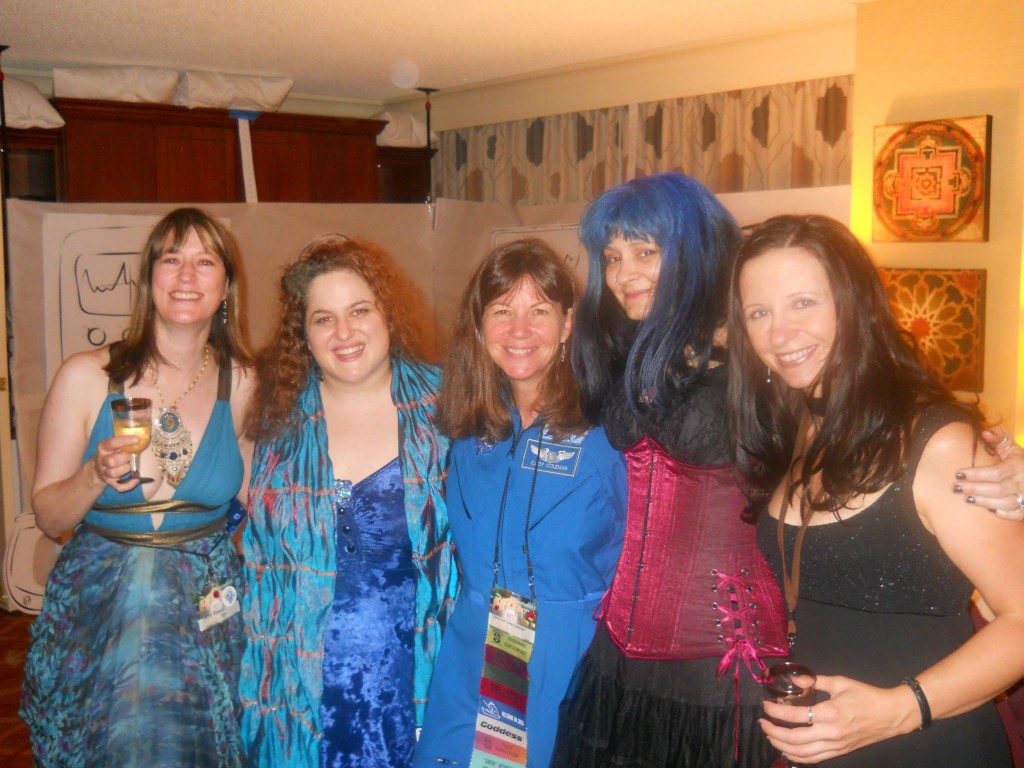
After the Hugos, with Amy Sisson, Francesca Myman, Cady Coleman, Stina Leicht.

There were panels: some informational, others provocative; some balanced, others not so much. I attended many discussions which featured friends, and I was treated to passionate conversations about poetry and science; plot problems; the future of short stories; science, space, and speculative fiction; and China through the lens of its science fiction.

"Science, Space Exploration, and Speculative Fiction Collide"  Panel with Mrco Palmieri, Ann VanderMeer, Stanley Schmidt, John Chu, and astronaut Cady Coleman.
“Science, Space Exploration, and Speculative Fiction Collide” Panel with Marco Palmieri, Ann VanderMeer, Stanley Schmidt, astronaut Cady Coleman, and John Chu.

There were awards, where I cheered for Campbell-nominated friends (yay Max Gladstone and Stina Leicht) and celebrated those who won Hugos (yay John Picacio, Best Professional Artist; and Galen Dara, Best Fan Artist); and there were After Parties, places to celebrate with friends.

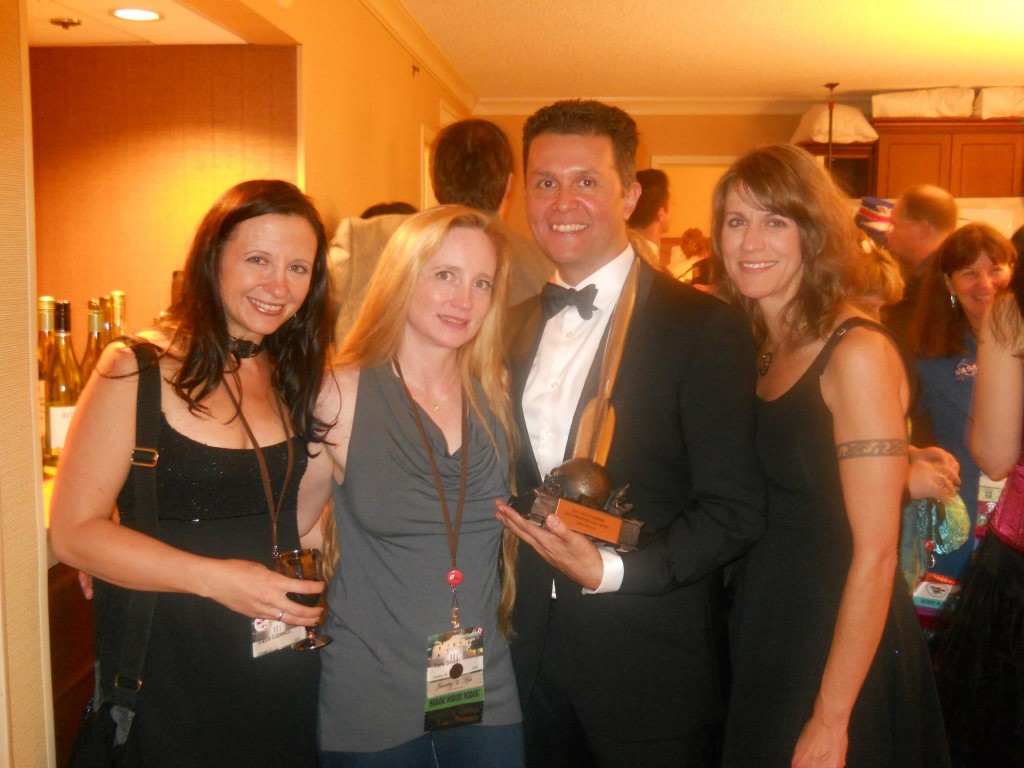
After the Hugos: Wesley Chu, Stina Leicht, Max Gladstone, and David Boop.
After the Hugos, with Tara Smith, John Picacio, and Nancy Hightower.

There were large public spaces where we congregated for wifi and coffee, for meetings and impromptu chats; and when the sun went down for wine, scotch, sweet things, and more coffee.

In such good company, hanging out with wonderful Tor people: Ellen Gallo, Max Gladstone, Stephanie Neely, Miriam Weinberg, Stacy Hill, and Carrie Vaughn.
In such good company, hanging out with wonderful Tor people: Ellen Gallo, Max Gladstone, Stephanie Neely, me, Miriam Weinberg, Stacy Hill, and Carrie Vaughn.

Those “writers in the wild” times were my favorite–the casual moments when we wandered and were welcomed at tables and beside bars. When a conversation could carry on late into the night, or well into the morning. Because sometimes 5am guacamole along the riverwalk is a way of holding onto the magic for a little while longer, before we all have to return to the real world and the work that makes up most of our days.
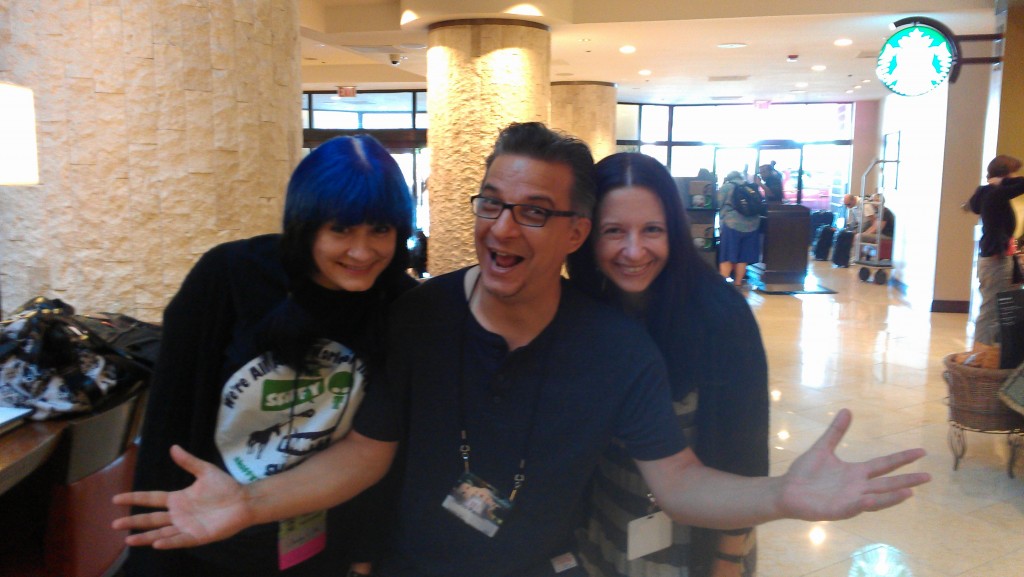
Monday morning with Stina Leicht and Marco Palmieri.

So I came home and delved back into the stories  I’ve been working on all summer, finishing up a novelette and a few shorts, tweaking some poems, and sending things out to readers. Fall brings the next novel and the excitement of delving into ancient history to build a new world and a new cast of characters who will live inside my head until it’s done.

My fabulous roommates: Nancy Hightower and Stina Leicht.

In the meantime, there are little tastes to keep us going: tweets at midnight when we’re writing, facebook chats and email exchanges. It helps to keep us connected, but nothing can compare with midnight marshmallows, early morning guacamole, and coffee in the company of good friends.
Listening

It’s summer, and so I’ve started reading The Hobbit to the kids before bedtime. Even the youngest is entranced, her imagination exploding with hobbits and dwarves. I love to read beautiful writing, well-crafted sentences, dramatic passages, poetic phrases. It’s a joy; and as a writer, I try to learn something from the work, even as I say the words aloud to the captive audience of my children.

My parents read to us before bed, and I loved it. As soon as I got to college and learned about author readings, I was entranced! What a joy to hear the words of beloved writers spoken aloud. Similarly, I love audiobooks–to sit or walk or drive and listen as the stories come alive. It feels decadent, because I’m doing none of the work, just listening to the luscious words and watching the pictures in my mind’s eye.

Recently, I’ve been on a short story kick, so I looked up short story anthologies that were available as audiobooks. I wanted to share two that I really enjoyed. The stories are excellent and well-narrated:

The Best of Fantasy and Science Fiction Magazine, a “super-duper triple issue, comprised ten key selections (most of the contents, actually) of FSF‘s September issue and the forthcoming double October/November issue” 2003. All very different, there are some real gems in those issues, including stories by Gene Wolfe, Joe Haldeman, Terry Bisson, and more.

Naked City, edited by the wonderful Ellen Datlow, includes stories by Peter Beagle, John Crowley, Ellen Kushner, Jeffrey Ford, and so many others. Maybe it’s from growing up in Chicago, but I love stories that feature cities as characters or integral backdrops, and this anthology has a fantastic range of responses to the “naked city.” I enjoyed all of them, but I think my favorite may be Delia Sherman’s “How the Pooka Came to New York City.”

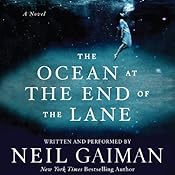
While not a short story, I would be remiss if I didn’t mention Neil Gaiman’s newest novel The Ocean at the End of the Lane (which recently reached #1 on the New York Times Best Seller List!)

I already had the pleasure of reading the novel (you can read my Goodreads review here), but I was especially looking forward to hearing it read.

If you have attended one of Neil’s readings or listened to an audiobook that he narrated, you quickly get the music of his voice in your head. I think that it gets to the point where you can read the words and hear him there in your mind’s ear, because he is as much a storyteller as he is a writer. In words and performance, he knows how and when to build tension, to make you feel unexpected and conflicting emotions, to surprise you, to scare you, and to create a genuine empathy for characters who come to life in brilliant dialog.

The Ocean at the End of the Lane is one of his finest so far, and I could not wait to hear Neil read it aloud. I was not disappointed. It’s wonderful. If people loved the novel, they will cherish the audiobook, because the intimacy, honesty, and raw nostalgia of this mythic, yet very human, tale are even more compelling when listening to Neil’s reading.

xxo

Not Yet

For the record, I am not an 80-year-old woman. Not yet.

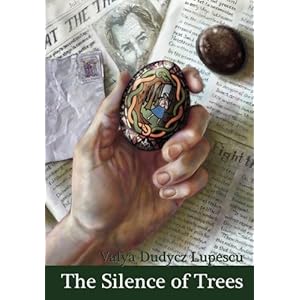
The Silence of Trees is not an autobiography. It is fiction set in a historical context.

Last night I paid my first visit to a couples bookclub for The Silence of Trees. I am most often invited to speak at bookclubs comprised predominently of women. If there are men present, it’s for a mixed-gender bookclub, but they do not usually attend as couples.

This group met when they had been seated together for the wedding of one of their children. They hit it off so well that they decided to continue to start this bookclub.

The hosts and guests were gracious and enthusiastic, their discussion lively and a lot of fun, but the hostess was slightly disappointed that I was not an 80-year-old woman.

She was sure that the novel was actually an autobiography, and she was prepared to welcome Nadya to her home. She had decorated the dining room table with a tablecloth and china that she thought would befit an elderly Eastern European guest.

When I walked in the door, she was completely thrown off. She couldn’t shake the image she had constructed in her mind of the author and narrator as the same person. What followed was an interesting conversation about how I could put myself into the mindset and create the voice of an older woman.

I’m thrilled that the character of Nadya was believable, that’s so important, but I couldn’t stop thinking about our discussion all the way home. I wonder if other writers get asked variations of that question, “How did you write this character (who is unlike you in some way: be it gender, race, age, etc.) with such authenticity?”

Clearly, when writing science fiction, horror, or fantasy, the author is creating characters who are magicians, clones, werewolves, monsters, and aliens. There’s an inherent suspension of disbelief when you open a genre book. I wonder if the genre audience is better prepared to accept a character who is unlike the writer in some way?

Can I explain the magic that happens when I sit down and slip into a character to write his or her story? Not really. It’s like trying to explain the terrain of the imagination.

When I sit down to to write, sometimes five hours will pass by in a flash. When I look up from my writing, it will be some ungodly hour in the morning, and I’ll have written thousands of words and feel as if I’ve been out of ordinary time and space for a while.

That’s the magic of writing.

After that comes the hard work of craft: shaping and revising to make sure I’ve told the story in the best way possible.

That’s the work of writing.

I love what I do. I’m so grateful that people want to read my words.

I thank you for reading–wholeheartedly.

Now back to the work.