The Things We Hold On To

I have been fortunate to meet and get to know quite a few writers who have had a profound influence on me and my work. I’m grateful for each and every exchange. (I once received a phone call from poet Louise Glück that left me shaken in the parking lot of the grocery story because I was so taken by surprise to hear her voice.)

I believe in telling the people in my life whom I love and admire how much they mean to me, and I also believe in telling the writers and artists I admire how much their work means to me. Kyle Cassidy has written repeatedly about this in his blog, and I agree with him.

When I am on the receiving end of an email or tweet about my work, I am so appreciative and touched. So much of the time we write alone. To hear from the “audience” is a rare gift.
Photograph: Sophie Bassouls/Sygma/Corbis

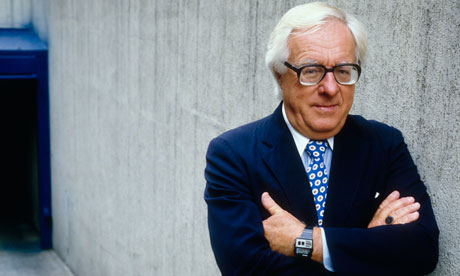
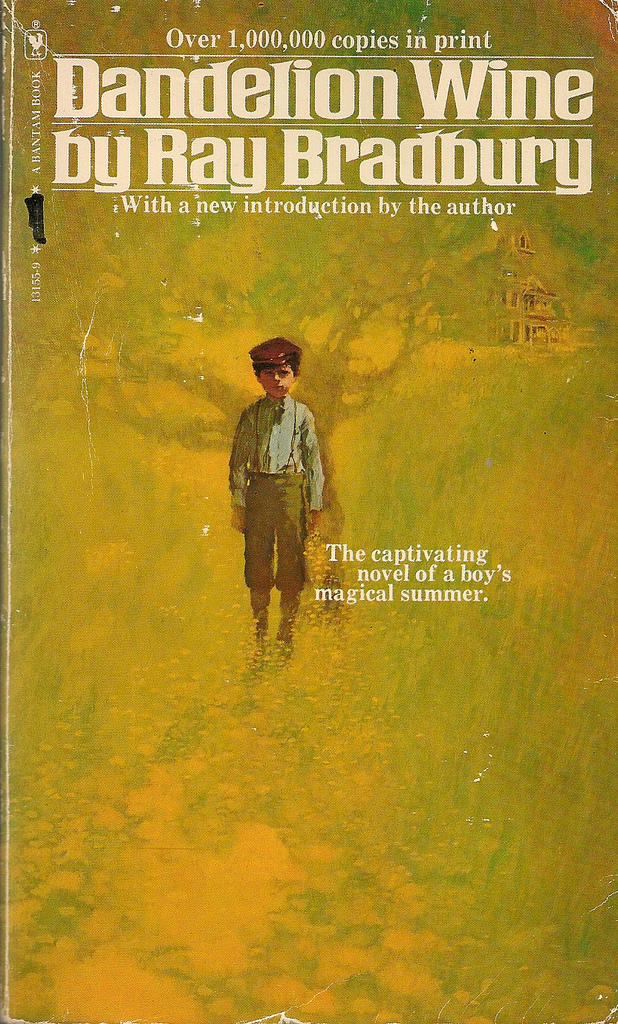
I sent Ray Bradbury a fan letter back in 2010. I wanted to thank him for his stories, for the joy and inspiration, for the thrills and magic.  After talking with a friend and fellow-Bradbury fan, I included a copy of my much-loved and tattered copy of Dandelion Wine. I was reluctant to part with it, but excited at the possibility that he might sign it.

The problem was that I forgot to include my self-addressed stamped envelope. I didn’t realize this until I returned from the post office and saw it sitting on my table. I quickly drafted another letter and stuffed the envelope inside.

He never returned my copy. I suppose it was tossed aside due to its lack of SASE. However, a few weeks later, I did receive this:

Although sad to be missing my beloved Dandelion Wine, I was pleased to know that he had read my letter. I hadn’t read his story, “Juggernaut” at the time, and sought it out immediately. (You can read it here.)

I was a little upset when I saw the envelope, however. I thought that my youngest daughter (three-years-old at the time) had scribbled all over it. I nearly threw it in the trash. I’m not sure why I kept it.

I put it aside in the “to be framed someday” pile. I still haven’t gotten around to that large pile, and after Ray died, I went back to it. I looked more closely at the paper, which must have come from his printer. I liked the thought that it came from his working space, from the place where he created his amazing stories.

Reading another essay about Ray at the time, someone mentioned the doodles he often drew to accompany his signature. Curious, I googled and found a few examples. Like this one:

and

and this one:

That’s when I realized it had not been my daughter’s scribble, but Ray’s!

Many who knew Ray Bradbury have written beautiful, heartfelt tributes:

By his biographer and friend, Sam Weller.

By his friend Neil Gaiman.

Mark Evanier, recounting his meeting with Ray as a teen.

My grandmother is dying, and because I cannot yet bring myself to write about her, I’m writing about Ray.

I like that I have this envelope and printer sheet of Ray’s, a small link to him and his work. I need to purchase that paperback of Dandelion Wine again. I’d like to reread it, but I want the same edition. I’ve grown attached to the cover.

When someone dies, we often want to keep the connection somehow, to remain tethered in some way. We do it with photographs, letter, articles of clothes. We do it with books and art, with songs and videos. We use the tools they used: a wooden spoon, a pen, a guitar pick, a thimble. We put on their perfume or drink their favorite beer. We try to remember. It’s hard to let go.

I guess I’m not just writing about Ray.

Words ripe and juicy

Words.

When I see light hit the tree branches during a December sunset on a particularly calm day, and it reminds me of the way life is fragile and hope is present even if for a fleeting moment, I try to translate it into words.

When my husband is lying on an ER table during a heart attack in the middle of the night, pale but joking with nurses, and at the same time asking to talk with our oldest daughter on the phone (“just in case”), I want to translate it into words.

Maybe it’s because words help me: to make sense, to share, to save any given moment. I know friends who do this with photography, “capturing” life.  For me it’s words. It has always been words.

A few years ago, I read an article about Love Languages in which the author, Dr. Gary Chapman discusses five different ways that people express their love:

Words
Time/attention
Gifts
Acts of service
Physical touch

It’s no surprise that for me, it’s touch and words.

If I give you a hug, I mean it. If I tell you I love you, I really mean it.

Words.

I surround myself with them. Collecting books like lost photographs in an ancestral album. Together they tell a story, even as they each have their own voice.  Separately, they are a gift to be treasured.

Words are like leaves at the bottom of particularly delicious cup of tea (for me, a cup of Fortnum & Mason’s Russian Caravan, black). If I love them, I look into them, trying to see beyond the story, beyond the living characters, beyond the beautiful sounds, into the poetry that lies at their heart: the magic of the words.

Children understand the poetry, the magic. I’ve watched my three as I read to them, cherished stories or new adventures. I love when we discover the magic together; it’s one of my favorite things in all the world. It’s the reason my next book was written for children.

So as we begin a new calendar year, I find the urge to look back with words. I am always aware of “how much has been written.” But this isn’t about “how much.” I’m not placing each word to be weighed on the Goddess Maat’s scale. The answer to that would be: not enough. There are always more words to be written.

The stories are there, the character clamoring for attention, but the last year, 2011, was heavier with life than written words. Some years are like that, and though I wish I had made time for more words, I understand that sometimes life happens. Sometimes new babies are born, heart attacks happen, blueberry girls must be blessed, family members in crisis happen, pillow forts occasionally need to be built, and towers of doom must be played with. There are times when we need to put the pen aside to be present.

And yet, there were still words. Here on the blog, on facebook, and on twitter, I have a way to record moments and share them. I still have my notebook for story fragments and plot ideas, but the internet has created a community that wasn’t possible for a writer who would likely spend much of her time in a room, or perhaps out walking, or maybe sipping coffee in a café…alone. Marvelously, the internet has brought many of us who would be solitary together, so that we can be alone and also connected.

So late one September evening, when my husband was in the hospital after a heart attack, I didn’t really want to talk, not even to my father who sat beside me in the waiting room, but I could send out a few tweets. I could shout out a moment of fear and heartache. The miracle of twitter and email and facebook, was that people responded. Friends offered to come by or call, but their messages of support were enough, those words across time and space were exactly what I needed. Thank you to everyone who sent prayers and energy.I thought about Twitter a lot after that, because it’s such a strange creature, something my generation did not grow up with and many have resisted. Some friends love facebook, others text constantly, or skype, or tumblr. We all seem to adopt different technological tools depending on our needs and personalities.

I still prefer the online journal because it allows me to meander, and I am coming to appreciate tumbler as it lets me collect different bits, but I like twitter best. I’ve come to the following conclusion: Tweets are like dehydrated fruit.

Rotten grapes make rotten raisins, but the best fruit—robust peaches, sweet apples, and other juicy delicacies make delicious dried fruits. Twitter can be like that. Much of it is forgettable, most of it is ordinary and that’s ok. Some of it is terrible, but occasionally it can be wonderful.

Words. Carefully chosen words:

Happy. New. Year.

Three words to hold so much, like a tiny tweet.

The year has begun. It’s a new page.

Happy? What makes it happy? What makes you happy?

Whatever it is, I hope you find it. I hope that you fill your new page with words ripe and juicy and bursting with potential.

Happy New Year.

The Magic of Music

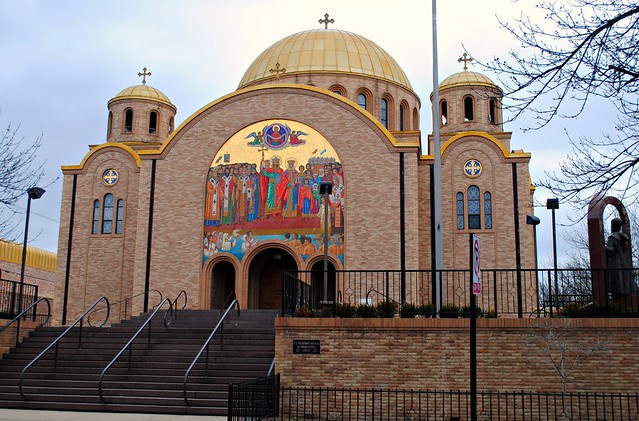
As a child, my favorite part of going to Mass at Sts. Volodymyr and Olha Ukrainian Catholic Church was the music. The walls, covered with their beautiful icons, were a feast for the eyes and my  young imagination, but it was the music that transported me into another world.

Mass was usually sung in Ukrainian and accompanied by a choir of voices in the balcony. Standing with my parents and little sister, I remember closing my eyes and feeling like I had stumbled into another world. I was absolutely certain that those voices and music got God’s attention. It was my first experience with the very real way that music could transform a space into something sacred.

The first time I remember hearing Gregorian chants, I was in high school, and it was a similar experience. I recall sitting in my religion classroom blown away by the power of those voices. Later, it made perfect sense to me that ethereal bands like Enigma or Dead Can Dance would incorporate the chanting into their music. There was power there.

As I got older, I became interested in comparative religions and learned that the ancient Greeks were among the first to document the ways that music shifted the collective consciousness of a group of people. I became especially interested in shamanic music and the ways that indigenous holy men and women used drumming and their voices to heal, to protect, and to communicate.

My first drumming circle, hearing the heartbeat of those many drums working together, was another of those pivotal moments that touched something deep inside of me. Although maybe not as elegant, drumming was raw, honest, and primal. The drum beat is so much like the first sound we all hear–the heartbeat of our mother in the womb. It is the sound of our own heart as we learn to sit quietly and meditate. It is a sound that stretches across time and space.

After following more breadcrumbs of myth and music, I encountered ritual theatre. Theatre emerged from ritual and mythology as a way to recreate sacred stories and repeat certain actions for a desired end. From the ancient Greeks to contemporary Balinese, ritual drama engages the community and allows participants to surrender themselves to the ritual process.

Last weekend, Mark and I had the pleasure of watching my favorite ritual theatre ensemble, Terra Mysterium, perform the Snow Queen version of Betwixt & Between, A Journey into Faery for their Winter Gala.

Held at the Chicago College of Healing Arts on Devon, the performers masterfully wove the web of their story about the Snow Queen, two human children, and the Fae.

All the members are talented, and I’ve had the pleasure of seeing them perform in several other venues. Each performance has been wonderful and wonder-filled, but this time I was struck by how polished they have become, how cohesive as a group.

When Terra Mysterium sang their beautiful songs, I recalled those days in church as a child, when all the world faded away and I felt a part of this magnificent music that filled the space. Their music was magic. Terra Mysterium took my breath away, transported me to another world, and inspired my imagination.

Plato believed that music was a form of medicine that brought order to our souls. In this day and age, when there is so much disorder and dissonance, we could all use a little more music in our lives.

So I leave you with two songs from Terra Mysterium:

Walk To My River (music and text by Shannah Lessa Wojtyska; arranged by Matthew Ellenwood)

07 Walk To My River

Athrabeth (music by Matthew Ellenwood, text by Keith Green):

09 Athrabeth