It’s summer, and so I’ve started reading The Hobbit to the kids before bedtime. Even the youngest is entranced, her imagination exploding with hobbits and dwarves. I love to read beautiful writing, well-crafted sentences, dramatic passages, poetic phrases. It’s a joy; and as a writer, I try to learn something from the work, even as I say the words aloud to the captive audience of my children.
My parents read to us before bed, and I loved it. As soon as I got to college and learned about author readings, I was entranced! What a joy to hear the words of beloved writers spoken aloud. Similarly, I love audiobooks–to sit or walk or drive and listen as the stories come alive. It feels decadent, because I’m doing none of the work, just listening to the luscious words and watching the pictures in my mind’s eye.
Recently, I’ve been on a short story kick, so I looked up short story anthologies that were available as audiobooks. I wanted to share two that I really enjoyed. The stories are excellent and well-narrated:
The Best of Fantasy and Science Fiction Magazine, a “super-duper triple issue, comprised ten key selections (most of the contents, actually) of FSF‘s September issue and the forthcoming double October/November issue” 2003. All very different, there are some real gems in those issues, including stories by Gene Wolfe, Joe Haldeman, Terry Bisson, and more.
Naked City, edited by the wonderful Ellen Datlow, includes stories by Peter Beagle, John Crowley, Ellen Kushner, Jeffrey Ford, and so many others. Maybe it’s from growing up in Chicago, but I love stories that feature cities as characters or integral backdrops, and this anthology has a fantastic range of responses to the “naked city.” I enjoyed all of them, but I think my favorite may be Delia Sherman’s “How the Pooka Came to New York City.”
While not a short story, I would be remiss if I didn’t mention Neil Gaiman’s newest novel The Ocean at the End of the Lane (which recently reached #1 on the New York Times Best Seller List!)
If you have attended one of Neil’s readings or listened to an audiobook that he narrated, you quickly get the music of his voice in your head. I think that it gets to the point where you can read the words and hear him there in your mind’s ear, because he is as much a storyteller as he is a writer. In words and performance, he knows how and when to build tension, to make you feel unexpected and conflicting emotions, to surprise you, to scare you, and to create a genuine empathy for characters who come to life in brilliant dialog.
The Ocean at the End of the Lane is one of his finest so far, and I could not wait to hear Neil read it aloud. I was not disappointed. It’s wonderful. If people loved the novel, they will cherish the audiobook, because the intimacy, honesty, and raw nostalgia of this mythic, yet very human, tale are even more compelling when listening to Neil’s reading.
If Chicon7 was a village of science fiction fans and creators meandering from panel to party to presentation; ICFA34 was the fantastic equivalent of Cheers, a bar where you could usually find a seat, the faces were familiar, and the more time you spent there, the more likely it was that everybody would know your name.
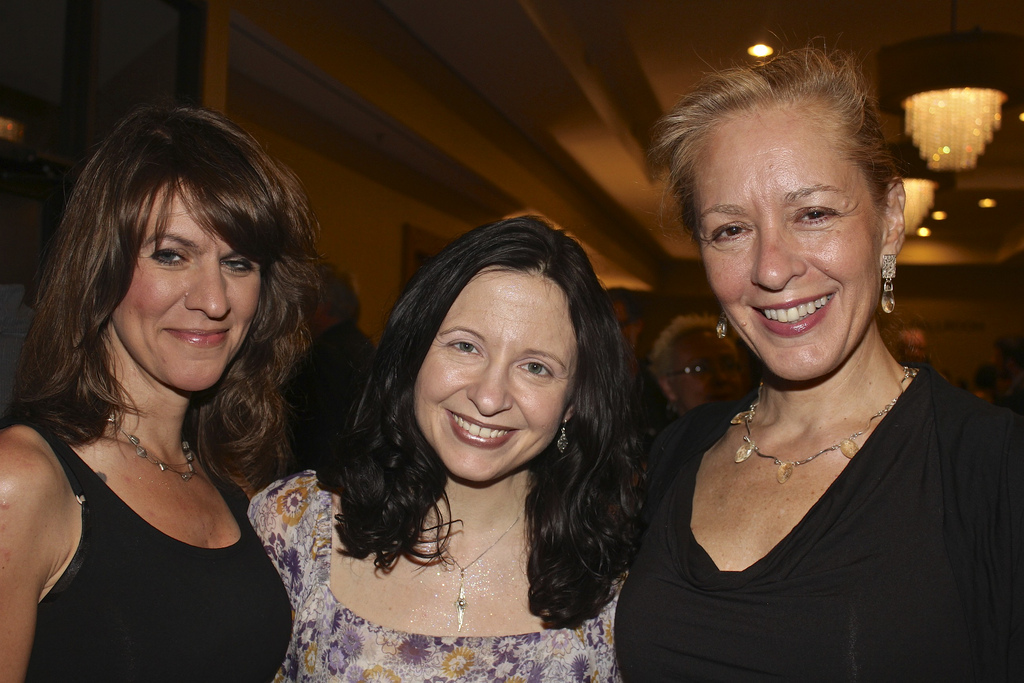
Sofia Samatar, me, Nancy Hightower, and Kat Howard.(Photo by Jim Kelly.)
My first time at the International Conference on the Fantastic in the Arts (ICFA), I was grateful for the presence of a few friends; for even though attendance was in the hundreds rather than thousands, it was still easy to feel overwhelmed in a crowd where so many people already knew each others.
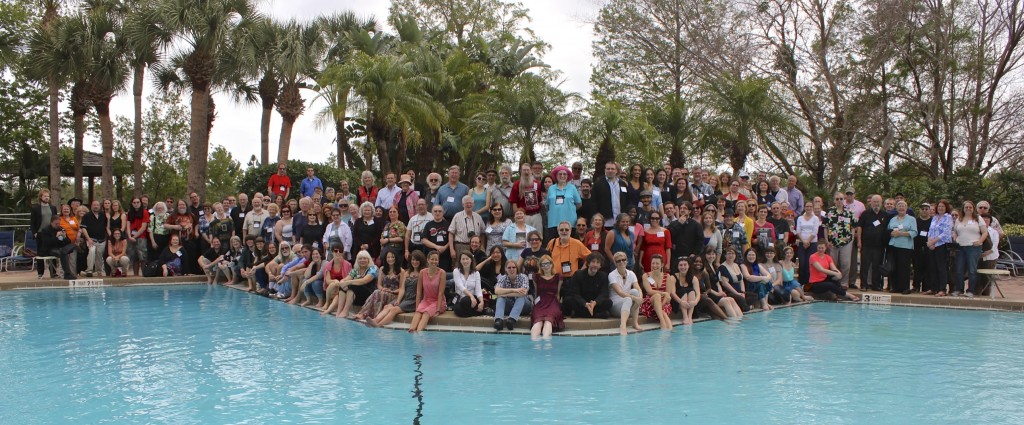
ICFA Group picture by the pool. (Photo by Bill Clemente)
Neil Gaiman was one of the Guests of Honor this year, and my first night in Orlando, I found myself at a dinner table with familiar faces (Kat Howard, Maria Dahvana Headley, Peter Straub, Neil and Amanda, as well as a few I had only known online, among them Charles Vess, John Clute, and Ellen Klages). We had a thoughtful chat about WWII survivors and their secrets/stories on the walk over to dinner, and a lively conversation full of laughter over dinner and wine. I could not have asked for a more wonderful beginning to ICFA.
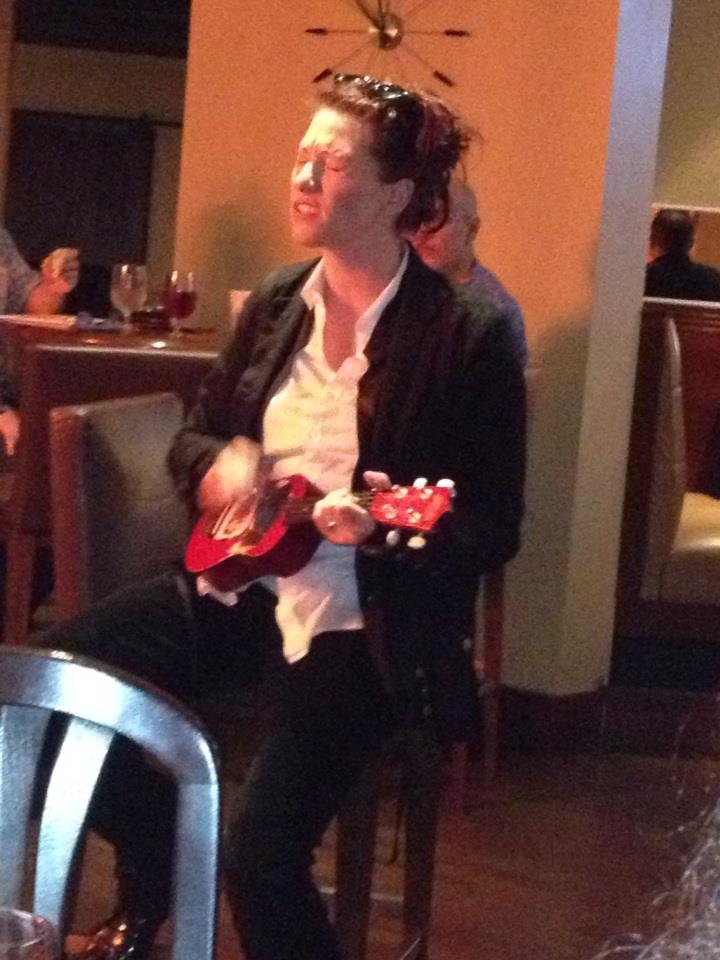
The evening ended as did so many at ICFA, in the hotel bar with new and old friends. However that first night we were treated to a performance of Radiohead’s “Creep” by Amanda on her ukelele. The bar was silent as the small crowd listened. The song choice seemed perfect in so many ways.
Amanda Palmer at ICFA (Photo by Andy Duncan)
Although I had planned to be a quiet observer this first time around, Nancy Hightower asked me to fill in on her panel “Transforming Fact to Fiction” after she had two cancellations from flu-stricken authors not in attendance.
Nancy and I. (Photo by Andy Duncan)
Together with Nancy and Greg Bechtel, we had a lively 8:30am panel on Thursday morning. That was also where I met the amazing Sofia Samatar, whose novel A Stranger in Olondria, is due out this month (take note: Pre-order your copy form Small Beer Press today!)
Team Heliotrope: Nancy Hightower, Maria Dahvana Headley, and Kat Howard.
The rest of the weekend followed in a happy blur of luncheon talks, panels and readings, poolside introductions, and late-night bar conversations.
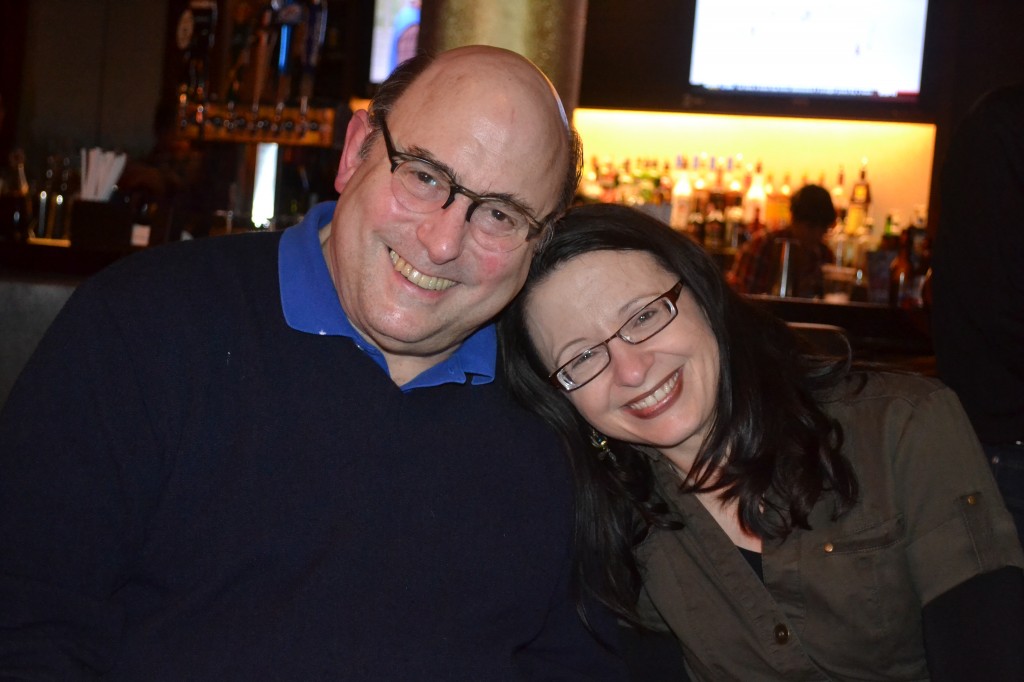
Bespectacled with Peter Straub. (Photo by Ellen Datlow)
I am grateful for the opportunity to spend time with Nancy, Maria, Dora, Peter, Gary and Stacie, and happy to have met so many wonderful people: Greg and Sofia, Francesca Myman and Liza Groen Trombi from Locus (to which you should subscribe if you don’t already), Katherine Pendill and Helen Pilinovski, Andy and Sandy Duncan, and others.
Nancy, me, and Katherine Pendill at the Awards Dinner (Photo by Bill Clemente)
The last night of the conference was the Awards Banquet, a rather gala affair where writers, editors, and academics donned suits and gowns to sparkle, sip cocktails, and celebrate.
ICFA Group picture by the pool. (Photo by Bill Clemente)
Following dinner, everyone moved poolside. I had spied a set of chairs around an unlit firepit earlier in the day…
The firepit in daylight.
My hope was to retire there after dinner if given the chance.
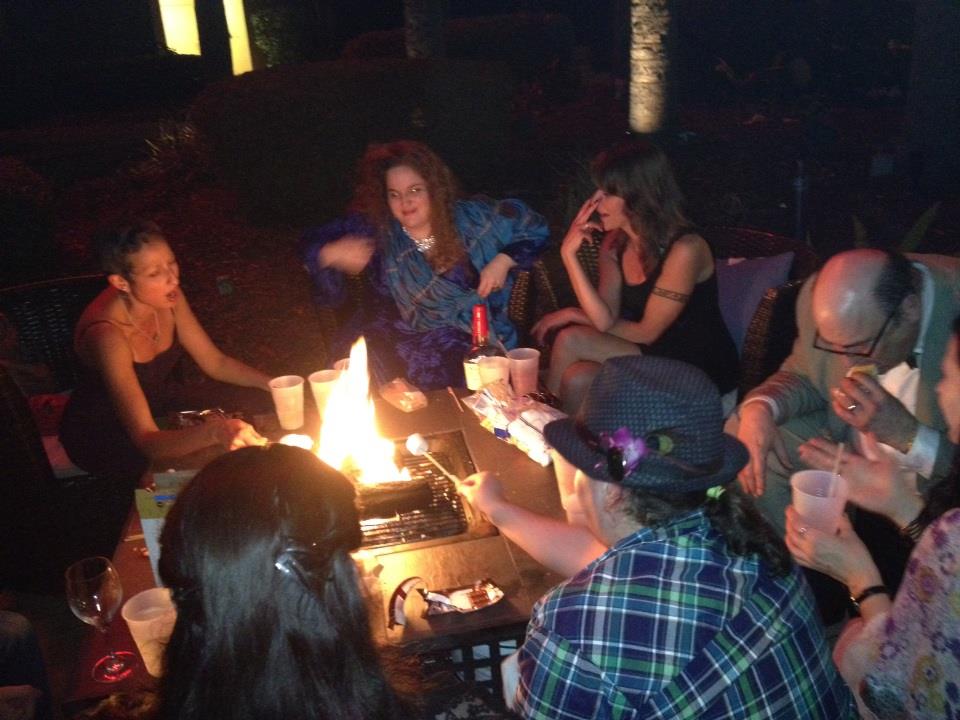
Around the fire (before the s’mores).
The server was kind enough to light the fire. I ordered a drink and was happy to sit and people-watch. Friends popped by to sit and chat, then moved on. At one point, Neil came by, and I mentioned that there was only one thing missing from a nearly perfect moment: marshmallows. (I made a mental note for next year.)
Neil went on to visit with other friends, but a few hours later he returned with friends…and marshmallows!
S’mores! (Photo by Andy Duncan)
Apparently Sarah Pinborough had never had s’mores, and someone had been kind enough to run out and purchase the necessary ingredients. Sarah, Neil, Peter, Maria, Kat and others gathered around and shared the spoils.
It was the perfect way to end the evening. Marshmallows and cocktails, conversations and joyful hugs. I went to bed so full of happiness.
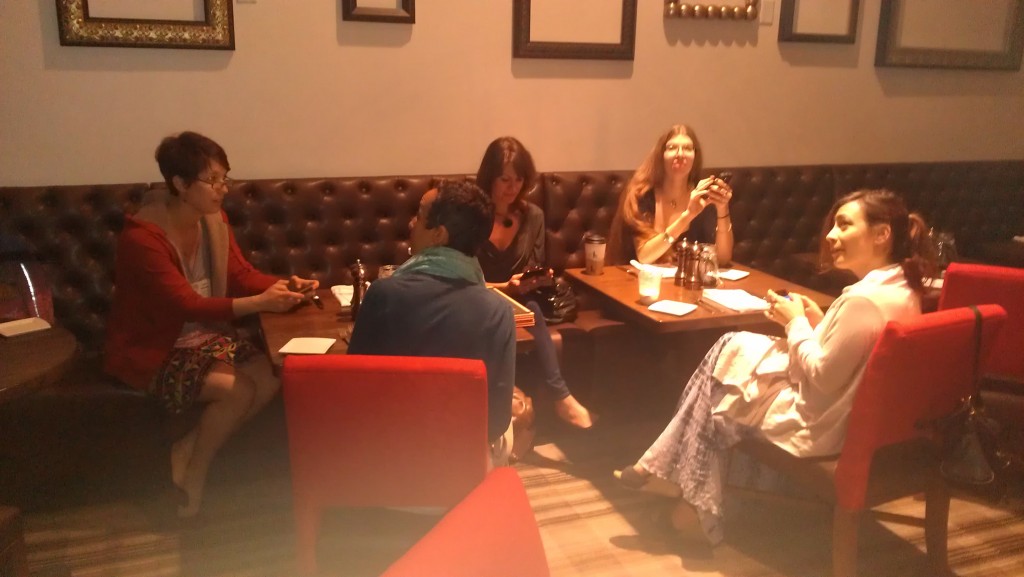
The next morning most people were leaving, and those of us who remained eventually met up in the lobby where we sat on laptops and phones, reconnecting with the outside world.
Until the tornado. Yes, tornado.
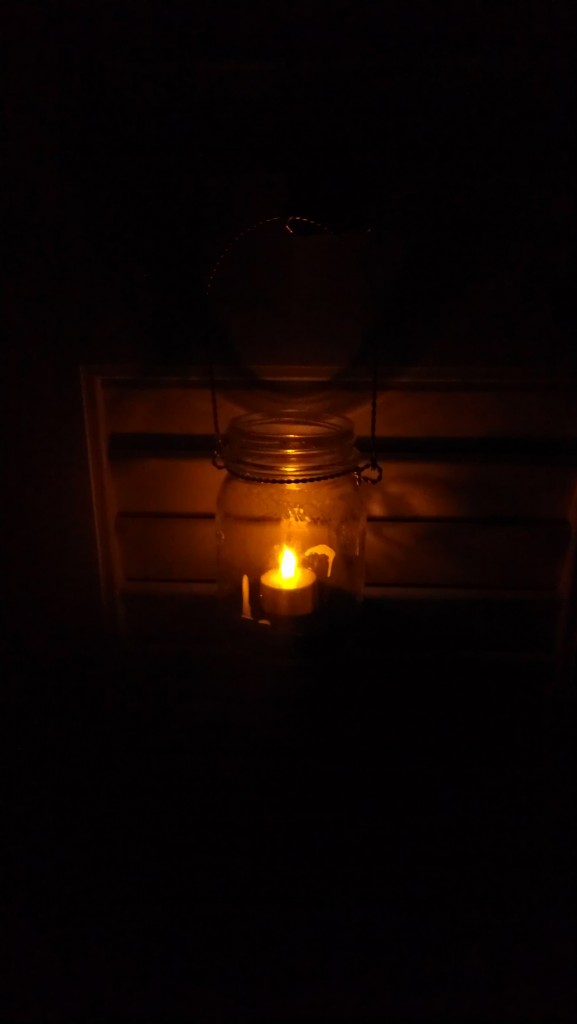
A few of us took refuge in the windowless inner room of the tavern restaurant, well-lit with emergency lighting even when the power went out.
In the restaurant to ride out the storm, a.k.a. “tornado bunker.”
Liz Gorinsky, Lara Donnelly, Maria, Nancy, Sofia, Greg, and I were treated to champaign and potato chips, salad and sandwiches by the attentive servers. Dora eventually joined us, and we rode out the storm safe in our little bunker, sipping champaign by lantern-light and talking.
The tornado passed, and we disbanded to our separate flights home, dinners, and downtime. Power eventually came back on, and we came together for last time in the bar, this time joined by Jeff and Anne VanderMeer in the large booth in the back. I was excited to get the chance to leaf through Jeff’s Wonderbook. Nearly complete, it is a masterpiece in image and text about the craft of writing.
Then an early morning flight, and my first ICFA was over.
I believe in the importance of communities: creative, social, etc. We have the ability to choose our tribe, to invite into our circle people with whom we connect, people who make us laugh and inspire us to be more. When I came back to Chicago from Germany in 2009, I was hungry for a community of writers. I am so grateful to have found them.
We may not reside in the same cities or even the same countries. We may see each other in person only a few times a year, but we savor those connections. So much of our time is spent alone at our laptops or with notebooks in hand, but places like ICFA remind us that we are not alone. They allow us the time and space to reconnect with our tribe of mad creatives. It makes the tweets and emails, pictures and blog entries even more real when we know that eventually there will be hugs and champagne and sometimes even s’mores.
I woke up this morning and this was stuck in my head, a birthday gift for a friend who inspires me with the depths of his imagination. Happy Birthday, Neil Gaiman.
For Neil
There was once a man who caught stories in his hair.
As a boy, he took his favorite book, the one with shadows and heroes, and he climbed up to the roof of his parent’s home. He opened the book and waited for the stories to escape the prison of their pages. They did, because stories want to be shared, and the boy was happy.
While he was sitting there, listening to the words whisper their farewell as they set upon the clouds, he felt something land atop his head. It dripped down over his eyebrows and inside his ears like a cracked egg. Suddenly he had to tell someone, so he slid down the drainpipe and shared the story.
The boy began to experiment, climbing trees and mountains, sitting very still on the tallest perches until one story would catch and then another and another. When it worked, and it usually did, he was delighted. Catching stories in his hair was as much fun as setting them free. The boy found that the stories were better companions than many of the people in his world. The boy also learned that by sharing them, he found a way to feel less lonely.
Soon the boy grew into a man, and though he still enjoyed rooftop adventures, he no longer had to scale mountains. The stories would find him when he was walking in the park or eating his breakfast. In fact, so many stories settled in his hair that his hair grew longer and more wild to hold them. He had to work quickly to free them and make room for the others.
Sometimes the man needed a break, and he would cut his hair and walk among people with only a stray haiku caught behind his ear or or a tiny folktale wrapped in a curl at the base of his neck. He enjoyed it for a while, but the man missed them and his hair eventually grew.
So the man lived his life and made a living with the stories in his hair, and he often wondered about the other people he passed on the street. What did they catch in their locks?
Sitting in his favorite cafe, he watched people under the weight of his crazy hair. He drank of a pot of tea and kept pushing the novel that hung from the fringe on his forehead out of his eyes.
Until he heard music. He turned his head to see the source and discovered the music was coming from a table behind him; and not just from the table behind him, but from the hair of the woman seated at the table behind him. Her hair was moving like waves to the melody ensnared inside, and she bounced along in her seat. Their eyes met, and she stood up and walked over to join him, stopping to pat the top of his head.
They sat listening to the murmuring and the humming, and they were happy. Then the man with the hairful of stories and the woman with her dancing curls stood up and walked away to find other people who caught things in their hair.
Many people didn’t realize that they had things stuck in their braids or caught in their crewcuts. The man and the woman would gently shake them free and teach them how to pay attention. Together they wandered and watched and listened, and they discovered a world full of people with paintings, poems, and poppets in their hair.
One morning, the man woke up to find a song in his hair, and he grinned.