I’ve spent a lot of time in dentist offices. A lot. Yes, I brush. I floss. I go for my checkups, and yet rarely do I leave without something being uncovered. There have been plenty of run-of-the-mill cavities and decay, failing old metal fillings, chipped teeth and damage from stress grinding. Then there were the root canals and crown lengthenings, the abscesses and gum tissue grafts, the bone grafts and problematic extractions, the implants that went in crooked and had to heal and be refitted more than once. (I never did have braces through. Maybe this is the tradeoff?)
One of my dearest friends, Jerry, is the only other person I know who shares a similar tooth curse, and we often commiserate while pondering which God of Oral Hygiene or Patron Saint of Tooth Woes we have offended in this or a prior life.
So I’ve spent a lot of time in the chair, and to make myself feel better (by focusing my attention elsewhere to escape the sounds of drilling and grinding in my skull), I started writing stories in my head that I would continue on subsequent visits. “The Tooth Butcher” is one such story that began with meditations on the tooth fairy and attempts to answer the question, “What happens with all those teeth?” I’m so happy that it found a home in The Horror Library Volume 7.
Editor Eric Guignard is revealing one contributor a day for the anthology, to be published by Dark Moon Books on March 1, 2022.
I’m excited to share that my poem “Chicago blur: 1995 to 2020” was published this month in the poetry journal Spillway 29, guest edited by Patricia Smith, who recently won the Poetry Foundation’s Ruth Lilly Poetry Prize; and Lynne Thompson, Poet Laureate of the City of Los Angeles.
As writers and artists, we are constantly being influenced by those who came before us and those who are working alongside us. In the early days of the pandemic, in April 2020, Creative Distancing, in partnership with the Philbrook Museum of Art, published a series of creative project tutorials on YouTube, offering artistic prompts from a number of creators. One of these featured a poet, author, and educator whose work I love, Quraysh Ali Lansana, talking about a form he created, the blur poem.
I was inspired to write my own blur poem and worked on it during those early months of the pandemic. I’m delighted for it to be included among so many wonderful poems in Spillway 29. The annual poetry journal is not online but is available for purchase through Small Press Distribution.
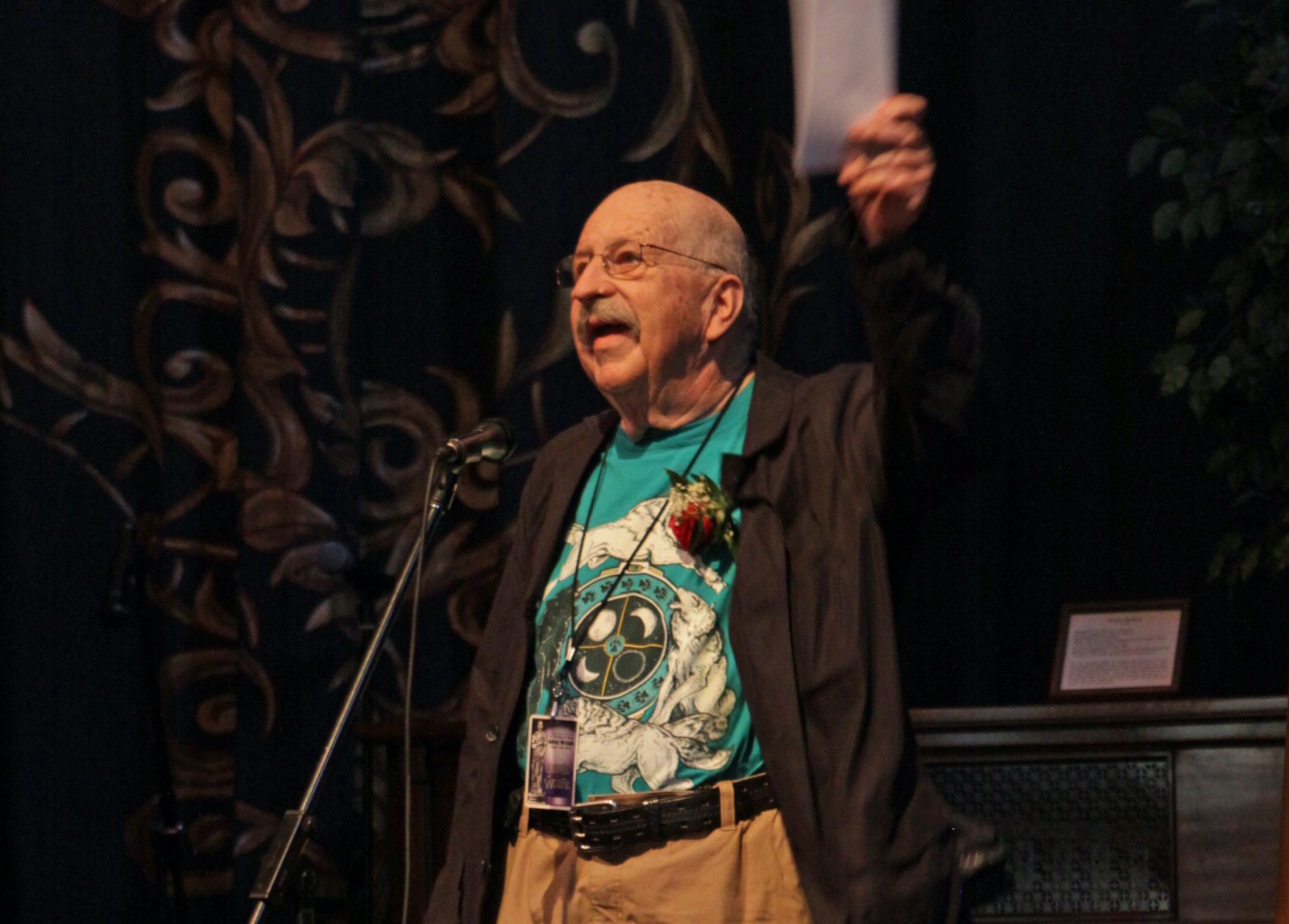
Gene Wolfe accepting the Fuller Award, 2012. (Photo by 8 Eyes Photography)
In 2012, it was my privilege to help develop a new award for the Chicago Literary Hall of Fame, the Henry Blake Fuller Award, honoring a living author for their outstanding lifetime contribution to literature. We honored Gene Wolfe with the first Fuller at a beautiful ceremony at Sanfilippo Estate in Barrington Hills on March 17, 2012. My account of the evening is here on my blog. It was magic.
It has been almost a decade, and Gene is no longer with us. Tomorrow, on Sunday, September 19, 2021, we will induct him into the Hall of Fame proper, along with Carlos Cortéz, Jeannette Howard Foster, and Frank London Brown, in a ceremony at the City Lit Theater in Edgewater.
I will be presenting Gene’s award to his daughter, Therese Wolfe-Goulding. Kathie Bergquist will be our emcee, and there will be speeches by the other presenters, Tracy Baim, Carlos Cumpián, Kathleen Rooney, and those accepting the awards on behalf of the other inductees. While it won’t be broadcast live, there will be a recording of the event that will be up on the Chicago Literary Hall of Fame website later.
My tribute to Gene, along with rest of the program, will also be available on the website after tomorrow. (I’ll add it to the post here.)
It was challenging to find the words… actually, it was challenging not to go over the word limit for what we had the space for in the program… to celebrate this wonderful writer who contributed so much to literature and whom I was honored to call my friend.
I miss him, his anecdotes and unusual facts; his stories about growing up, writing, and convention adventures; his kindness, his smile, and his sense of humor. I treasure those conversations, and I will be so happy to present the award to Teri.
I hold onto the fact that I have those memories, and we have his words—his stories and novels, his letters and interviews. It makes me happy to know that he will be joining the ranks of other important writers who have called Chicago home, and who have previously been inducted in the Hall of Fame, including Studs Terkel, Gwendolyn Brooks, Nelson Algren, Lorraine Hansberry, Richard Wright, L. Frank Baum, Saul Bellow, Roger Ebert, and Mike Royko. The full list, along with biographies, is on the Chicago Literary Hall of Fame website.
One of my favorite photos of Gene with his daughter, Teri at the Fuller Award Ceremony. (Photo by Carl Hertz)
I’m going to share a video that I stumbled upon when I was doing a little research. In 1982, Gene Wolfe, Harlan Ellison, and Isaac Asimov appeared on a show called “Nightcap: Conversations on the Arts and Letters” hosted by Studs Terkel and Calvin Trillin.
At the time Gene was 51, only a few years older than I am today. It was interesting to see this younger Gene, just over a decade into his career, and yet he’s much the same Gene I got to know at 80.
We don’t often to get to know and love our literary heroes. It’s definitely a gift when we do, and I think it changes us for the better, but the rest of that I’m saving for my speech tomorrow night.
 I’ve spent a lot of time in dentist offices. A lot. Yes, I brush. I floss. I go for my checkups, and yet rarely do I leave without something being uncovered. There have been plenty of run-of-the-mill cavities and decay, failing old metal fillings, chipped teeth and damage from stress grinding. Then there were the root canals and crown lengthenings, the abscesses and gum tissue grafts, the bone grafts and problematic extractions, the implants that went in crooked and had to heal and be refitted more than once. (I never did have braces through. Maybe this is the tradeoff?)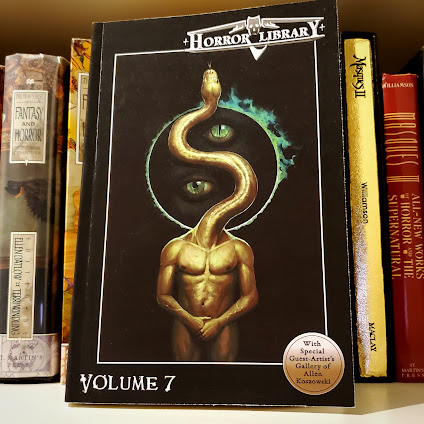



 It was challenging to find the words… actually, it was challenging not to go over the word limit for what we had the space for in the program… to celebrate this wonderful writer who contributed so much to literature and whom I was honored to call my friend.